Trust and Will in California: Simplifying Legal Documents

Planning for the future is an important step, and understanding trusts and wills is crucial, especially in California. These documents are key to estate planning, allowing you to manage your assets and ensure your wishes are honored after you pass. California has specific rules guiding how trusts and wills are created and executed, offering unique benefits to its residents.

Trusts and wills play different roles in estate planning, but together they form a comprehensive plan. A will specifies how your assets should be distributed after your death, while a trust can manage your assets during your lifetime and beyond. Let’s explore the types of trusts and wills, including revocable wills, living trusts, and the benefits of family trusts, focusing on their relevance in California.

Basics of Trust and Will in California

In estate planning, a trust involves a trustee managing assets for a beneficiary’s benefit. Trusts can take effect during your lifetime or after your death. A will is a legal document that dictates how your assets should be distributed posthumously and can also appoint guardians for minor children.

While both documents are important, they serve different purposes:

  • Trusts offer privacy by avoiding probate, the court process of distributing assets after death.
  • Wills provide clear instructions for asset distribution and can appoint guardians, but must go through probate.

Having both a trust and a will ensures a thorough estate plan. A trust manages and protects assets during and after your lifetime, while a will covers assets not included in the trust and addresses guardianship.

Revocable Will and Trust: Flexibility in Estate Planning

Flexibility is vital in estate planning, and a revocable will and trust provide just that. These documents adapt as your life changes, allowing you to amend them as needed. This adaptability ensures your estate plan remains relevant and effective over time.

A revocable will dictates how your assets should be distributed upon your death and can be changed or canceled as your situation evolves. Similarly, a revocable trust, or living trust, lets you manage your assets during your lifetime and specify their handling after your passing. For more details, visit Revocable Living Trust California – Key Benefits & Setup Guide.

Benefits of a revocable will and trust include:

  • Amendability: Easily update your documents to reflect life changes like marriage or the birth of a child.
  • Control: Maintain control over your assets during your lifetime.
  • Privacy: A trust doesn’t go through probate, keeping your affairs private.

For more information on estate planning flexibility, visit the Estate Planning – Wills and Trusts – California Department of Justice.

Living Trust for Real Estate: Protecting Your Property

A living trust is an effective way to manage real estate, protecting your property and ensuring it is handled according to your wishes. By transferring real estate into a living trust, you safeguard your assets and simplify the process for your family. Learn more about setting up a living trust at How to Setup a Living Trust in California Easily.

A living trust for real estate works by:

  • Asset Transfer: Transferring property ownership into the trust, with you retaining control as the trustee.
  • Avoiding Probate: Property in the trust is distributed to beneficiaries without the lengthy probate process.
  • Continuity: If incapacitated, a successor trustee can manage the property, ensuring continuous management.

For practical advice on using a living trust for real estate, check out the Estate Planning – Wills and Trusts – California Department of Justice.

Simple Trust and Legal Living Trust: Understanding the Options

Understanding the different types of trusts is key to effective estate planning. Two common options are simple trusts and legal living trusts, each offering unique benefits based on your needs.

  • Simple Trust: Manages assets for beneficiaries, distributing income annually, ideal for straightforward estate management.
  • Legal Living Trust: Also known as a revocable living trust, it allows asset management during your lifetime, offering flexibility and probate avoidance. For more details, visit Wills and Trusts.

Your choice between a simple trust and a legal living trust depends on your goals. A simple trust offers a straightforward approach, while a legal living trust provides more control and flexibility, both essential in comprehensive estate planning.

Family Trust Benefits: Ensuring Financial Security

A family trust is a popular estate planning tool designed to provide financial security for your loved ones. It offers several advantages, making it appealing for many families.

  • Avoiding Probate: Bypasses the lengthy court process, ensuring quicker asset distribution. For more on avoiding probate, refer to The Probate Process in California – Nolo.
  • Financial Security: Protects assets from debts and legal issues, ensuring your loved ones’ future security.
  • Control Over Assets: Set terms for how and when beneficiaries receive their inheritance, ensuring your wishes are honored.

Establishing a family trust safeguards your family’s financial future, providing protection, control, and peace of mind, making it a vital part of a well-rounded estate plan.

Personal Trusts: Tailoring to Individual Needs

Personal trusts offer a tailored approach to estate planning, allowing you to customize your plan to fit specific needs and preferences. These trusts align with your personal goals, whether it’s providing for family, managing assets, or planning for future generations.

  • Customization Options: Adapt personal trusts to meet various objectives, including terms, beneficiaries, and asset management.
  • Meeting Specific Goals: Whether ensuring grandchildren’s education or supporting a charity, personal trusts reflect your priorities.
  • Tax Considerations: Understand the tax implications of personal trusts. For insights, refer to Income taxation of trusts in California.

Customizing your trust ensures your estate planning aligns with your wishes, providing peace of mind and security for your loved ones.

Summary and Next Steps

In summary, understanding trusts and wills in California is essential for effective estate planning. From revocable wills and living trusts to family and personal trusts, each option offers tailored benefits. Whether you’re protecting real estate, ensuring family financial security, or customizing your plan, these tools provide the flexibility and security you need.

As you consider your estate planning needs, remember that Legal Docs by ME is here to assist with personalized document preparation. We make the process easy, affordable, and efficient, helping you navigate estate planning complexities.

Visit Legal Docs by ME today to explore how we can support your estate planning journey and ensure your documents are prepared with care and precision.

California Probate Documents: Essential Guide & Probate FAQs

Dealing with probate can seem daunting, but at Legal Docs by ME, we’re here to make it straightforward. Probate is the legal process that ensures a deceased person’s assets are distributed according to their will or state law if no will exists. In California, this involves several steps and documents. Our guide aims to simplify this process, ensuring you’re well-prepared to manage estate matters efficiently. For more in-depth information, visit Probate in California.

Key Probate Documents You Need

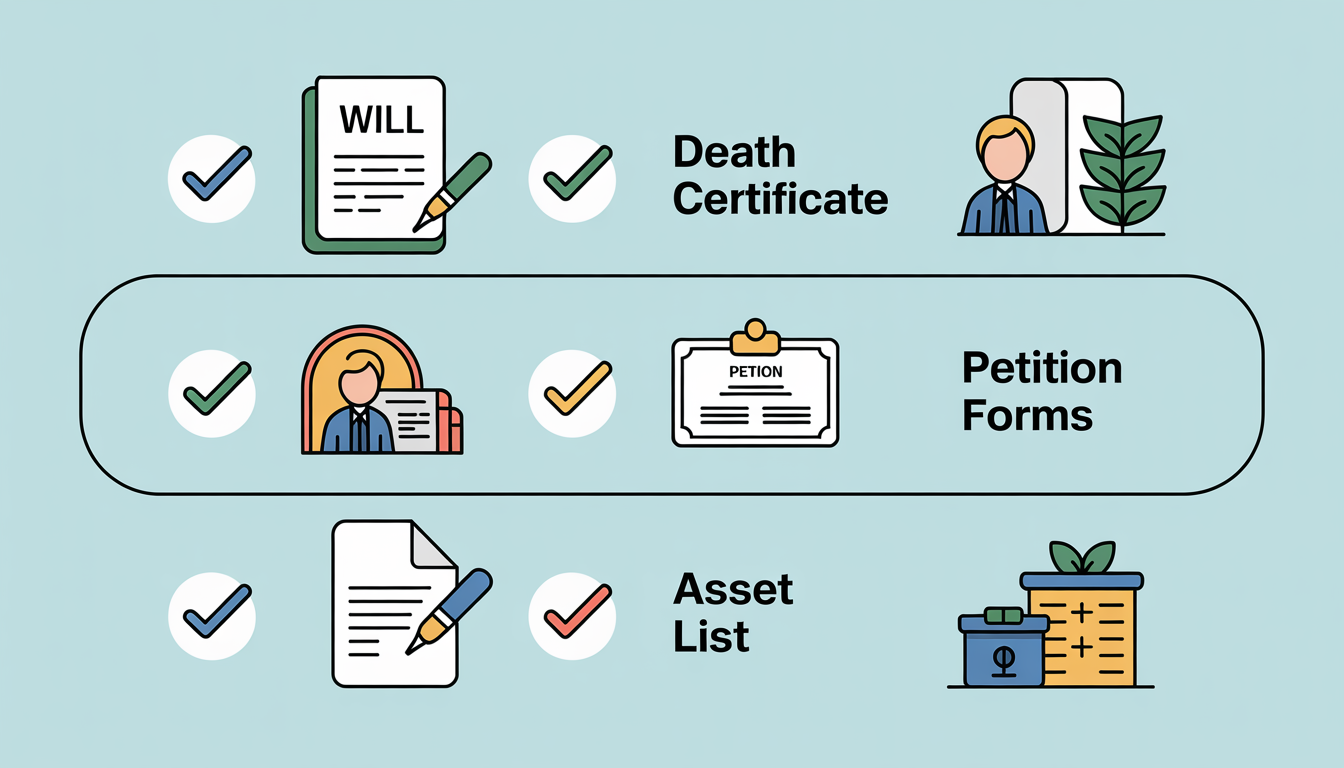
When navigating probate, having the right documents is crucial. Here’s what you’ll need:

  • The Will: The original document detailing the deceased’s wishes.
  • Death Certificate: An official document confirming the death.
  • Petitions and Orders: Legal forms related to estate administration.
  • List of Assets: A detailed inventory of the deceased’s assets, including properties and bank accounts.
  • Debts and Liabilities: Documentation of any outstanding debts.
  • Beneficiary Information: Contact details for all beneficiaries.

Being prepared with these documents helps ensure a smooth probate process.

What Are Probate Assets?

Probate assets are those owned solely by the deceased and can include:

  • Real estate
  • Bank accounts without a payable-on-death designation
  • Vehicles
  • Personal belongings

These assets are often probated to ensure proper distribution. For further details, check out Understanding Probate Court.

Simplifying Small Estate Probate

California offers a simplified probate process for smaller estates, making it faster and less costly. If the estate’s total value is under a certain threshold, you might qualify for this option, which includes:

  • Quicker processing
  • Less court involvement
  • Lower costs

Check California’s specific requirements to see if this applies to your situation.

Understanding Estate Probate Law

Knowing estate probate law is crucial for managing a loved one’s assets. Key aspects include:

  • Probate Court’s Role: Manages the probate process to ensure fair distribution.
  • Executor Responsibilities: Collects assets, pays debts, and distributes remaining assets.
  • Intestate Succession: State laws dictate distribution if there’s no will.

For more on legal developments, visit Finding California Legislative History.

The Probate of Wills: Meaning and Process

Probating a will validates it, allowing the executor to distribute assets as specified. The process includes:

  • Filing the Will: Submit the will to probate court for validation.
  • Notification: Inform beneficiaries and creditors of probate proceedings.
  • Asset Inventory: Compile a detailed list of assets for the court.
  • Debt Settlement: Settle any outstanding debts or taxes.
  • Asset Distribution: Distribute remaining assets to beneficiaries.

Understanding these steps helps in navigating the probate process smoothly.

How Long Does Probating a Will Take?

The timeline for probating a will in California varies, typically taking several months to over a year. Key steps include:

  • Filing the Petition: Initiate probate with the court.
  • Notice to Heirs and Creditors: Notify relevant parties within a month.
  • Inventory and Appraisal: List and appraise assets, which may take months.
  • Settling Debts and Taxes: Resolve financial obligations of the estate.
  • Distribution of Assets: Finalize by distributing assets to beneficiaries.

Factors such as estate size and disputes can affect the timeline. For more insights, visit How Long Does Probate Take in California?

The Importance of Estate Planning

Estate planning can simplify or even avoid probate. By planning ahead, you ensure your wishes are honored and reduce stress for your loved ones. Benefits include:

  • Clarity and Control: Clearly outline asset distribution.
  • Minimize Taxes and Fees: Reduce costs associated with estate transfer.
  • Avoid Probate: Use living trusts to bypass probate.
  • Peace of Mind: Assure your affairs are in order for your family.

For more on estate planning, visit Why Is Estate Planning Important?

Legal Docs by ME is here to help you prepare essential estate planning documents. Visit Legal Docs by ME to learn more about our services and how we can assist you in creating a comprehensive estate plan.

Simple Probate California: Understanding Estate Needs

Probate can seem daunting, but may be a necessary process to pass real property to heirs. In California, this process can be simplified through various types of probates, depending on the type of assets, value, and date of death.” At Legal Docs by ME, we aim to make this process as straightforward and stress-free as possible for you. For more details, visit Probate California.

In this article, we’ll clarify what simple probate involves, when probate on an estate is necessary. We’ll guide you through the probate document packet of your choosing. Legal Docs by ME can assist you every step of the way.

What is Simple Probate?

Simple probate is designed for smaller estates or those meeting specific criteria, making it quicker and less expensive than formal probate. It typically involves less court involvement, which can save time and money.

Benefits of simple probate include:

  • Cost-effective: Lower court and legal fees.
  • Time-saving: Faster asset distribution. For more on timelines, visit How Long Does Probate Take in California.
  • Less paperwork: Reduced documentation requirements.

Simple probate involves filing necessary documents, notifying beneficiaries, and distributing assets as per the will or state law. It’s an efficient choice for eligible estates.

When is Probate on an Estate Required?

Probate is often required to manage and distribute a deceased person’s estate. In California, probate is necessary in certain situations:

Understanding these scenarios can help with estate planning. For more on planning, visit Wills and Trusts.

Form DE-300 provides some information as to the different types of probates.

Informal Probate: A Simplified Process

Informal probate is another streamlined option, offering quicker and more affordable estate resolution.

Advantages include:

  • Less Court Involvement: Fewer hearings mean less stress.
  • Faster Resolution: Estates are settled more quickly.
  • Cost-Effective: Lower legal costs.

Informal probate suits straightforward, uncontested estates. For more on formal probate, visit the California Courts Self Help Guide.

The Need for Probate After Death

Probate ensures assets are distributed as intended, debts are settled, and legal authority is granted to manage the estate. Here’s why it might be necessary:

  • Clarifying Ownership: Establishes clear asset ownership.
  • Settling Debts: Ensures debts and taxes are paid.
  • Legal Authority: Grants executors the power to manage the estate.

For more on wills, estates, and probate, visit the Guide to wills, estates, and probate court – California Courts Self-Help.

Finding Your Local Probate Court

Locating your local probate court is a key step. Here’s how:

  • Online Search: Find your county’s probate court online.
  • Visit the Court: Check hours and locations before visiting.
  • Contact by Phone or Email: Reach out for general inquiries.

For details on probate court locations, visit the Probate Court Location | Superior Court of California.

How Legal Docs by ME Can Help

We understand probate can be overwhelming. Legal Docs by ME provides document preparation services to ease this process. Our goal is to make it affordable and efficient for you.

We offer:

  • Ease and Efficiency: Simplifying document preparation so you can focus on what matters.
  • Affordability: Competitive pricing for essential services.
  • Personalized Support: Tailored document preparation to suit your needs.

For more on how we can assist with your probate needs, visit Legal Docs by ME.

Summary and Next Steps

Understanding simple probate in California can ease the burden during difficult times. We’ve covered when probate is required, the benefits of informal probate, and how Legal Docs by ME can support you.

By familiarizing yourself with these processes, you can ensure smoother estate management. Legal Docs by ME is here to help with your document preparation needs, offering supportive and affordable services to guide you through probate matters.

If you’re ready to proceed or need assistance with legal document preparation, please visit Legal Docs by ME for more information and support.

Transfer on Death Deed California: Your Essential Guide

Estate planning in California can be simplified with the right tools, and one such tool is the Transfer on Death (TOD) Deed. This document allows property owners to pass on real estate directly to a chosen beneficiary upon death, bypassing the lengthy and costly probate process.

At Legal Docs by ME, we aim to make estate planning straightforward and affordable. In this guide, we’ll walk you through the benefits and process of TOD Deeds in California, and touch on related topics like living estate deeds, home deeds, and house deed titles.

What is a Transfer on Death Deed?

A Transfer on Death Deed is a simple way to ensure your property is passed to your chosen beneficiary without probate. In California, this deed allows you to name a beneficiary who will receive the property after you pass away, keeping the process quick and cost-effective.

Key benefits of a TOD Deed include:

  • Avoiding Probate: Skip the time-consuming and expensive probate process.
  • Ease of Use: Creating a TOD Deed is straightforward and can be part of a comprehensive estate plan.
  • Flexibility: Maintain full control of your property during your lifetime, with the option to revoke the deed if needed.

For more insights on estate planning, visit the California Courts Self-Help Guide.

Avoid Probate

Using a TOD deed to avoid probate offers several advantages:

  • Direct Transfer: Property is transferred directly to the beneficiary, simplifying the process.
  • Cost Savings: Avoiding probate can save on court fees and legal costs.
  • Quick Process: Bypassing probate speeds up the transfer, providing peace of mind.

For more on avoiding probate, check out this Nolo article.

Considerations for Transfer on Death Deeds

When using a TOD deed to transfer a house title, keep these legal points in mind:

  • Accuracy: Ensure all information, including names, is correct.
  • Compliance: Adhere to California state laws, including specific forms and filing requirements.
  • Avoid Pitfalls: Common mistakes include improper recording or execution.
  • Professional Help: Our services at Legal Docs by ME can help you meet the legal document needs efficiently.

By considering these factors, you can ensure a smooth transfer of your house deed title, providing security for your beneficiaries.

Conclusion and Next Steps

We’ve explored the essentials of a Transfer on Death Deed in California, a valuable tool for simplifying property transfers and avoiding probate. By understanding how to create a TOD Deed, you can ensure a smooth transition of your assets to your beneficiaries.

Explore our range of services, from wills and trusts to property deeds, and take the next step in securing your estate. Let us help you prepare your documents according to your wishes, bringing peace of mind to you and your loved ones.

Can I Write My Own Will and Testament ?

Planning for the future is a vital step in life, and having a will and testament is key to that process. A will ensures your wishes are respected and your loved ones are cared for after you’re gone. You might wonder, “Can I write my own will and testament?” While it may be legally possible in some situations, we do not encourage writing your own will or relying on generic online forms. The precise language used—and how the document is executed—matters. Errors or omissions can lead to confusion, delays, or an invalid will.

In this guide, we’ll focus on why everyone may want to have a will, what a valid will generally includes, and how to prepare the information you’ll need. We’ll also highlight common pitfalls to avoid so you can make informed decisions. For more on why having a will is crucial, visit The Importance of Having a Will – FINRED.

Understanding the Basics of a Valid Will

A will is a legal document that specifies how you want your assets distributed after your death. It serves important purposes, such as:

  • Designating beneficiaries for your property and assets
  • Appointing guardians for minor children
  • Specifying your final wishes regarding your estate

Every will should clearly address these key parts:

  • Executor: The person responsible for carrying out your will’s instructions.
  • Beneficiaries: Individuals or organizations who will receive your assets.
  • Assets: A detailed list of your property and how you want it distributed.
  • Guardianship: If you have minor children, specify who will care for them.
  • Signatures and Witnesses: Your signature and proper witnessing in accordance with state law to validate the will.

It’s crucial to meet the legal criteria for a valid will, which can vary by state and may include specific witnessing or notarization requirements. For more on these requirements, visit attorney-provided information provided here.

Preparing to Create Your Will: What to Gather

Before you have a will prepared, organize key information so the process is smooth and accurate:

  • List Your Assets: Include real estate, bank accounts, investments, digital assets, and personal property.
  • Choose Your Beneficiaries: Decide who will receive your assets, such as family members, friends, or charities.
  • Select an Executor: Choose someone you trust to manage your estate and ensure your wishes are fulfilled.
  • Consider Guardianship: If you have minor children, decide who will care for them in your absence.
  • Plan for Specific Bequests and Contingencies: Note any special gifts and who should inherit if a primary beneficiary cannot.
  • Execution Requirements: Understand your state’s witnessing/notarization rules so your will is properly executed.

For information about our document-preparation services for estate planning, visit Legal Docs by ME – Wills and Trusts.

About Online Wills: Important Cautions

Online templates and do-it-yourself forms are widely available, but they may not address the precise language and execution steps required by your state. Ambiguities, missing clauses, or incorrect signing procedures can cause serious problems later. We do not offer online wills and do not encourage writing your own will.

  • State-Specific Rules: Requirements for witnessing, notarization, and content vary and change over time.
  • Precision of Language: Small wording differences can have big legal consequences.
  • Complex Circumstances: Blended families, business interests, special needs planning, or tax concerns require tailored provisions.

If you’re researching will requirements, ensure you rely on reputable, current resources. For an overview related to California will basics and considerations, visit Draw Up a Simple Will in California Easily.

Common Mistakes to Avoid When Writing a Will

Whether you’re reviewing an existing will or preparing to have one drafted, be mindful of these frequent pitfalls:

  • Not Clearly Identifying Beneficiaries: Ensure all names and relationships are clearly stated to avoid confusion.
  • Forgetting to Update the Will: Life changes like marriage, divorce, or the birth of a child should prompt a review and update of your will.
  • Ignoring Legal Requirements: Each state has specific legal criteria for a valid will. Refer to resources like Common mistakes to avoid when writing a will – Lexology for guidance.
  • Not Signing the Will Properly: A will must be executed according to state law. Follow the correct procedure for witnesses and, where applicable, notarization.
  • Overlooking Executor Responsibilities: Choose someone trustworthy and capable of managing your estate according to your wishes.

Avoiding these mistakes helps ensure your will reflects your intentions and stands up to legal scrutiny.

How to Get Your Will Prepared Correctly: Steps and Considerations

Instead of relying on do-it-yourself templates, take a thorough, compliant approach to will preparation:

  1. Choose a Reputable Provider: Work with a qualified professional or a document-preparation service that clearly explains its role and process.
  2. Gather Necessary Information: Have details of your assets, beneficiaries, executor, guardians, and any specific wishes ready.
  3. Address Special Situations: Disclose unique family dynamics, business interests, or special needs so they can be handled correctly.
  4. Execute Properly: Sign your will with the required number of disinterested witnesses and, where required, a notary—following your state’s formalities exactly.
  5. Store the Will Safely: Keep your original in a secure place and inform a trusted person where it is located.
  6. Review Regularly: Revisit your will after major life events or every few years to keep it current.

For more information, visit Legal Docs by ME.

Wrapping Up Your Will Preparation Journey

A Will is one of the most important steps you can take to protect your loved ones and ensure your wishes are honored. Because specific wording and proper execution are essential, we do not recommend writing your own will or relying on online forms. A carefully prepared and correctly executed will offers clarity, reduces stress for your family, and helps avoid avoidable disputes.

At Legal Docs by ME, we provide personalized document-preparation services at your direction to help with your estate planning needs. We are not a law firm and do not provide legal advice. Whether you’re organizing information for a will, setting up a trust, or preparing related documents like a power of attorney or property deed transfers, our services are designed to be affordable, efficient, and supportive. For more on living wills and healthcare directives, visit Understanding Living Will & Healthcare Directive Essentials.

Property in a Living Trust California: Avoid Probate Easily

At Legal Docs by ME, we understand that planning your estate can feel overwhelming. That’s why we’re here to help you navigate the process with ease and confidence. A living trust is a powerful tool that can streamline the management of your assets in California, ensuring a smooth transition to your beneficiaries without the hassle of probate.

By placing property in a living trust, you can bypass the lengthy and costly probate process. This means your assets are transferred directly to your loved ones, saving time and money. Let’s explore how living trusts work, their benefits, and how you can set one up in California.

Understanding the Probate Process in California

Probate is the court-supervised process of distributing a deceased person’s assets. In California, this can be time-consuming and expensive. Court fees and lawyer costs add up quickly, often taking months or even years to resolve. For a deeper dive into probate, check out resources like Nolo or Legal Docs by ME.

A living trust allows your estate to bypass probate entirely. By transferring ownership of your property to a trust, you ensure your assets go directly to your beneficiaries, avoiding court delays and expenses. This makes a living trust an efficient choice for estate planning.

How Can You Avoid Probate with a Living Trust?

A living trust offers a straightforward way to avoid probate. Here’s how it works:

  • Ownership Transfer: Transfer ownership of your property to the trust. The trust, rather than you personally, owns the property.
  • Trustee Management: You can manage the trust as the trustee. After your passing, a successor trustee takes over to manage or distribute the assets.
  • Direct Transfer: The successor trustee transfers assets directly to beneficiaries, bypassing probate.

This approach ensures a seamless transition of your assets, maintaining privacy and efficiency. If you’re wondering how to avoid probate, a living trust is a key solution.

Living Trust vs. Will: Key Differences

When planning your estate, it’s important to understand the differences between a living trust and a will:

  • Probate Process: Wills require probate, which is public and time-consuming. Living trusts avoid probate, allowing for a private and quicker asset distribution.
  • Control and Flexibility: Both allow asset control, but living trusts offer more flexibility since you can modify them as needed without court involvement.
  • Pour-Over Will: Often used with a living trust to include all assets. However, these assets still go through probate. Learn more from MetLife.

While a pour-over will helps ensure all assets are included, it does not bypass probate.

Additional Benefits of Setting Up a Living Trust

Beyond avoiding probate, living trusts offer other advantages:

  • Privacy: Trusts remain private, unlike wills that become public during probate.
  • Efficient Estate Management: Manage assets during your lifetime and specify management if incapacitated.
  • Flexibility: Amend or revoke a revocable trust anytime as circumstances change. Learn more from Legal Docs by ME.
  • Protection for Minor Children: Manage assets for minors until they reach a specified age, offering security and management.

For more insights, visit U.S. Bank.

Set Up a Living Trust in California:

Using Legal Docs by ME simplifies this process with guidance and documents. For detailed steps, visit Legal Docs by ME.

Wrap-Up and Next Steps

Creating a living trust in California with Legal Docs by ME means avoiding the probate process and ensuring a smoother transition of your estate. We’ve compared living trusts with wills, highlighting benefits like privacy and control.

For personalized assistance with your estate planning documents, visit Legal Docs by ME. We make it easy to prepare your legal documents without stress.